- Plan on about 2 oz of cheese and 2 oz of meat per person if it's a starter, and roughly double that if the board is the meal.
- Pick three cheeses that don't taste alike (one soft, one firm, one strong), two or three meats, then crackers, fruit, something salty and something sweet.
- Build in this order: bowls first, then cheese, then meat, then crackers and fruit, then fill the gaps. It's what makes a board look full.
- Take the cheese out of the fridge 30 to 60 minutes before guests arrive. Cold cheese tastes of almost nothing.
- A big wooden board does half the work. A Large serves 4 to 6, an X-Large 8 to 12.
A good charcuterie board looks effortless, which is a bit of a trick. The ones that look like a magazine spread aren't made with fancier food. They're just built in a smarter order, on a board that's big enough to hold it all without things sliding off the edge.
So this is the practical version: how much to buy, what to put on it, how to lay it out so it looks generous, and how to look after the board when the party's over.
How much to buy
Buying too much is the most common mistake, and running out is the second. Here's a rough guide that works for most groups.
If there's a full dinner coming after, lean toward the low end. Same if it's one of several snacks on the table. If people are going to stand around the board all evening with a drink, lean high. Crackers and bread go faster than you'd think, so buy one more box than seems sensible. It keeps.
What to put on it
You don't need ten cheeses. Three that taste different from each other beat six that taste the same.
- Cheese (pick 3): one soft (brie, camembert, fresh goat cheese), one firm (aged cheddar, manchego, gouda) and one strong (blue, or an aged parmesan you break into chunks).
- Meat (pick 2 or 3): something thin and silky like prosciutto, something sliced like salami or soppressata, and maybe a pâté or a cured sausage you cut yourself.
- Something to carry it: two kinds of cracker (one plain, one seeded) and a sliced baguette.
- Fruit: grapes are the classic for a reason. Figs, apple or pear slices, and dried apricots all work too. In winter, mandarins and pomegranate look great and need almost no prep.
- Salty and sharp: olives, cornichons, pickled onions, marcona almonds.
- Sweet: honey for the blue, fig jam for the firm cheese, a few squares of dark chocolate.
That's it. If you want to add one thing, make it something seasonal, because it's the bit people remember.

How to build it so it looks generous
The order is the whole secret. Big things go down first, small things last, and you fill every gap at the end.
- Bowls first. Anything wet or rolling (olives, honey, jam, pickles) goes in a small bowl. Put two or three on the board, spaced out, not lined up. They're your anchors.
- Then the cheese. Place each cheese in a different area of the board, so every guest can reach at least one. Cut a few slices or wedges from the firm cheese to get people started, and leave the rest whole. A board that's already been cut into looks inviting. A board nobody's touched yet makes people shy.
- Then the meat. Fold salami into quarters, or make a "river" of slices that winds between the cheeses. Loosely drape the prosciutto in loops instead of laying it flat. It takes up more space and looks more abundant.
- Then crackers and bread. Fan them out in a curve next to the cheese they go best with. If the board's getting crowded, put the crackers on a separate tray beside it (more on that below).
- Then fruit, in clusters. Bunches of grapes, a little pile of figs. Clusters look deliberate. Scattering them looks like an accident.
- Last, fill the gaps. Nuts, dried fruit and chocolate go into every bit of bare board you can see. This step turns "a plate of snacks" into a board.
You can build the cheese and meat a couple of hours ahead, cover it with a damp tea towel and keep it in a cool spot or the fridge. Leave the crackers off until right before serving, or they'll go soft. Once it's out, the usual food guidance is to keep perishables at room temperature for no more than about two hours, so if the party runs long, refill it in rounds instead of putting everything out at once.
Which board to use
Size matters more than anything else here. A board that's too small makes even good food look cramped, and it means you're refilling every ten minutes. A rough guide:
| Board | Size | Serves, as a starter | Best for |
|---|---|---|---|
| The Block, Large | 17.7 x 11.8 in | 4 to 6 | Date night, a small dinner party, a cheese course after the main |
| The Block, X-Large | 23.6 x 15.7 in | 8 to 12 | Holiday parties, Friendsgiving, a board that's the centerpiece of the table |
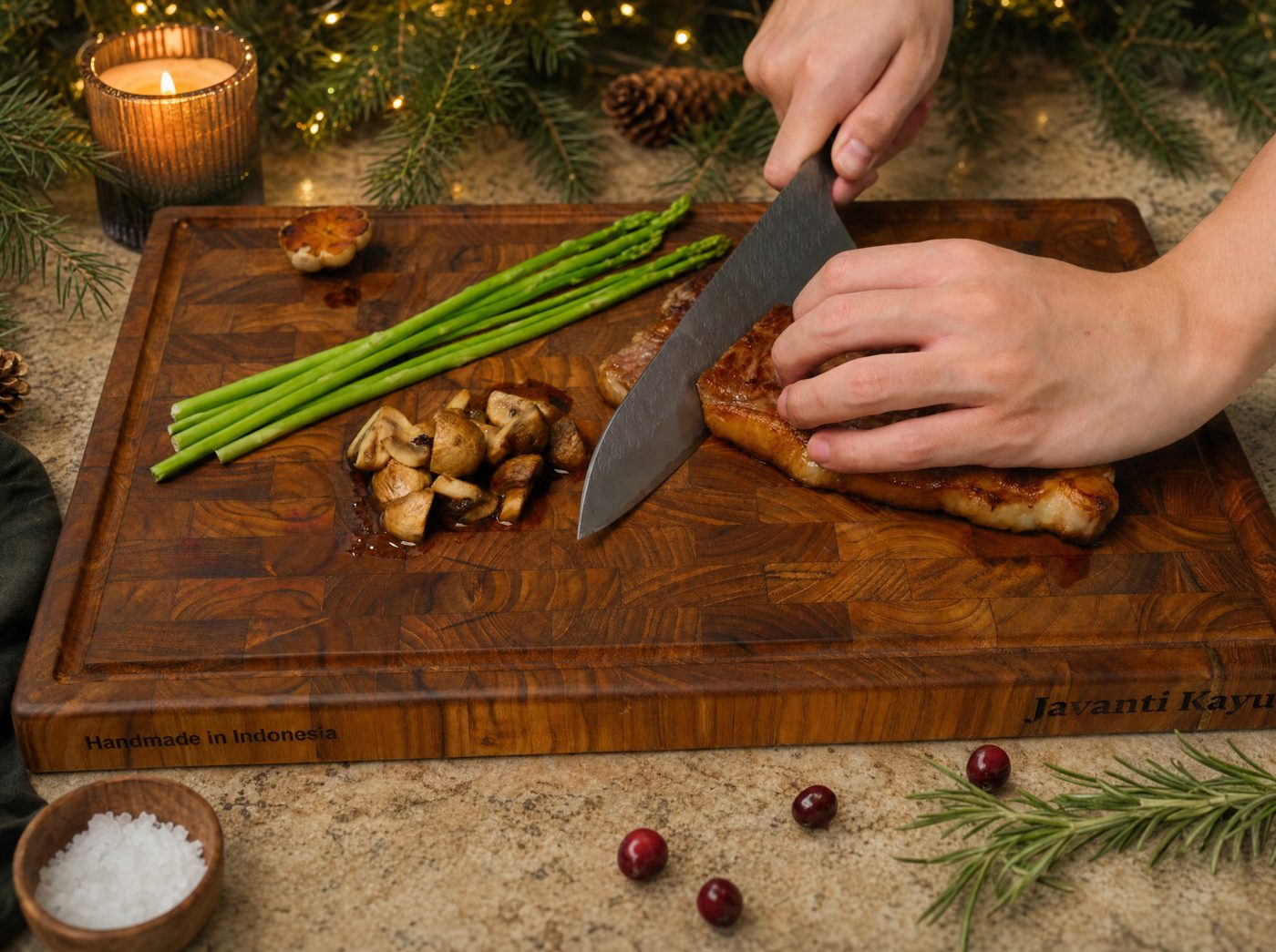
A few things make a proper wooden board better for this than a slate or a plate. It's warm-looking, so the food reads as generous rather than staged. It's heavy, so it won't slide when someone leans in to cut a piece of cheddar. And because The Block is end grain, guests can slice right on it without leaving a mess of knife scars behind. The fibers stand up toward the knife, so the cut closes back up instead of scoring across.
The carved juice groove helps here too. It's there for carving roasts, but on a cheese board it catches olive brine and the honey that always ends up running off the edge of the brie.
Reach for the reverse side if you like. The Block is reversible, with a flat face on the back, so you can keep one side for chopping and one side for serving if that feels nicer to you.
When the board isn't big enough
For a big crowd, don't try to cram everything on. Keep the cheese and meat on the board and move the crackers and bread to a long tray beside it. The Harvest Tray is carved from one piece of teak, about 16.5 by 5.5 inches, which is the right shape for a long fan of crackers or a sliced baguette. It also keeps the crackers away from anything wet, so they stay crisp.

"Big things first, small things last, and fill every gap. That's the whole trick."
After the party: looking after the board
Cheese and cured meat leave fat on the surface, so give the board a proper wash the same night instead of leaving it until morning.
- Scrape off what's left, then wash it by hand with warm water and a little mild dish soap. Never soak it, and never put it in the dishwasher.
- If a strong cheese has left a smell, scrub with coarse salt and half a lemon, then rinse.
- Towel it dry, then stand it upright so both faces dry evenly. The Solo Stand holds either size. The Large also fits the Duo Stand.
- After a busy season of hosting, give it a coat of oil. Our guide to board oils covers which ones to use, and the teak board care guide has the full routine.
If you're hosting a holiday meal, the same board can do two jobs: carve the roast on it, wash it, and bring it back out for the cheese course. Our guides to carving a turkey and carving prime rib cover the first half. If you're not sure which size suits your kitchen day to day, the cutting board size guide will help you decide. For anything else, the board, a knife each for the soft cheeses, and something to drink are all you need.